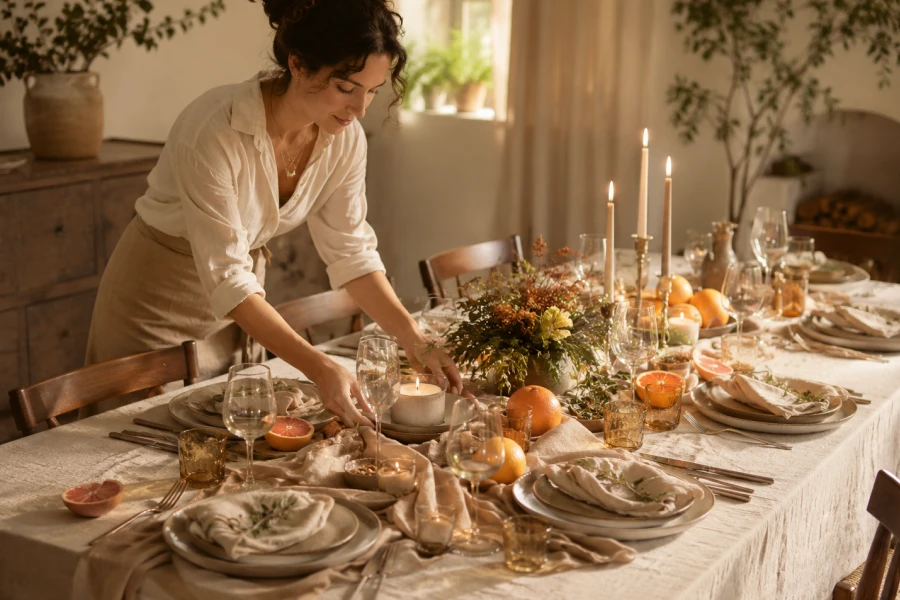
A warm aesthetic tablescape planner changes the way a meal feels before anyone takes a bite. It helps you think beyond plates, candles, and napkins as separate details. Instead, you build one complete atmosphere that supports the food, the room, and the people around the table. This matters because hosting often becomes stressful when every choice feels disconnected. You pick glassware, then flowers, then linens, then lighting, and suddenly the table feels busy. A more intentional method keeps everything softer, calmer, and more cohesive. It also makes simple meals feel considered without looking overdone. Guests notice the mood first. They feel welcomed before the first course appears.
The best table settings do not look perfect in a showroom way. They feel lived-in, warm, and quietly thoughtful. That is why a strong table concept starts with emotion, not decoration. You decide whether the evening should feel rustic, romantic, seasonal, relaxed, or elevated. From there, each choice becomes easier. Linen texture can soften the table. Amber glass can add glow. Olive branches can bring movement. Ceramic plates can make the setting feel grounded. A tool built around AI-powered table design helps turn that mood into a visual direction before you begin arranging anything physically.
Many hosts begin with what they own, then try to make those items work together. That can succeed, but it often creates a scattered table. A stronger approach begins with the feeling you want guests to experience. A cold-weather soup dinner may need candles, deep bowls, rustic bread, and soft napkins. A cozy weekend brunch may need lighter ceramics, fruit, herbs, and relaxed glassware. A small celebration may need height, glow, and one memorable centerpiece. When the mood leads, your pieces stop competing. They begin supporting the same visual story. Even a small table looks richer when every detail has a reason.
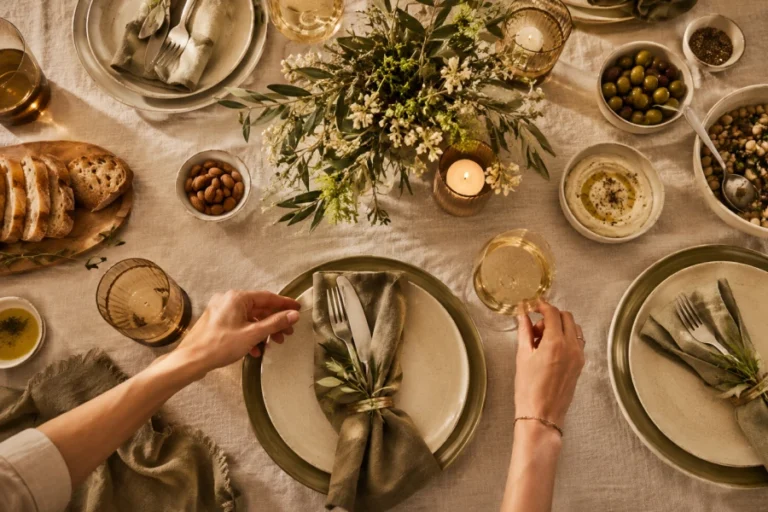
Hosting becomes easier when you remove too many decisions. A table can fall apart when you keep adding items because something feels missing. Usually, the issue is not lack of decor. The issue is lack of direction. Choose one texture family, one main color temperature, and one natural accent. For example, cream linen, warm wood, and olive greenery create a calm foundation. Add amber glass or candlelight if the room needs glow. Keep flowers low if conversation matters. Use cozy table styling ideas to test combinations before committing. This keeps the table polished but not crowded.
Texture is what makes a cozy table feel expensive without requiring expensive pieces. A plain plate looks more intentional on a woven charger. A simple napkin feels elevated when loosely folded instead of pressed flat. A humble bowl of soup becomes beautiful beside rustic bread, herb sprigs, and a handmade-looking spoon rest. The trick is restraint. Use contrast, but do not use every texture at once. If the table already has wood, linen, and stoneware, keep the centerpiece simple. If the room feels plain, add candlelight and greenery. Small shifts can change the entire mood. The goal is warmth, not visual noise.
The most useful moment comes before setup begins. You can imagine the table from above, from the guest’s seat, and from the room entrance. This matters because a table can look lovely in pieces but awkward as a whole. Tall candles may block faces. Oversized flowers may crowd serving dishes. Too many plates may make a casual dinner feel stiff. A structured planning process helps you see these issues early. It also helps you adapt to what you already own. With 3D layout prompts, you can shape a table concept that feels realistic, stylish, and easy to recreate.
Once the concept is clear, the actual setup should feel simple. Start by placing the essentials first: plates, glasses, napkins, and serving space. Then add the mood elements in layers. Put greenery where the eye needs softness. Add candles where the table needs glow. Use fruit, bread, or small bowls to make the setting feel generous. Step back after every layer and remove anything that feels forced. The strongest tables often have one quiet focal point and several supporting details. That balance makes the meal feel intimate. It also lets the food remain part of the design, not an afterthought.
A beautiful table does not need to be complicated. It needs a clear atmosphere, practical spacing, and thoughtful repetition. When the colors, textures, lighting, and food all belong to the same mood, the table feels effortless. Guests may not name every detail, but they will feel the care behind it. That is the real power of planning. You are not just decorating a table. You are shaping the first impression of the evening. A cozy meal becomes more memorable when the setting supports it. Warmth becomes visible. Hosting feels calmer. The dinner begins before anyone sits down.



Leave a comment