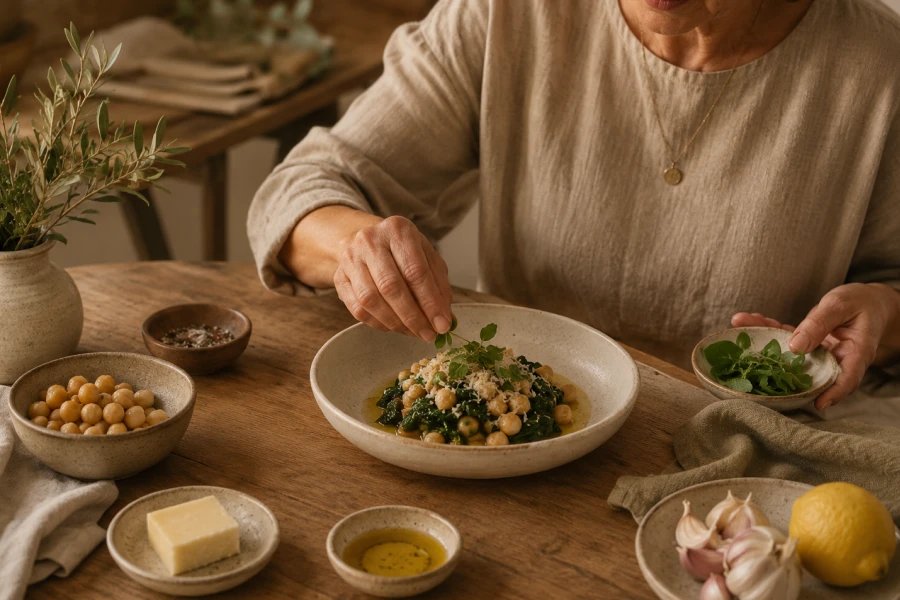
Pantry comfort meals are the quiet solution for nights when the fridge looks uninspiring and takeout feels too easy. They help you build something warm from ingredients already within reach. This style of cooking feels especially valuable when time, energy, or budget feels tight. You do not need a perfect plan. You need a few reliable combinations and the confidence to use them. Pantry meals can be creamy, hearty, crisp, brothy, or bright. They can also feel surprisingly personal. With the right approach, shelf-stable staples become dinner that feels calm, comforting, and fully intentional.
A good pantry is not about hoarding. It is about readiness. When you keep versatile staples nearby, dinner becomes less fragile. Beans, pasta, rice, lentils, tomatoes, oats, broth, and canned fish can all become complete meals. The trick is knowing how to combine them well. A focused minimalist recipe method makes those combinations easier. You stop staring at shelves without ideas. You start seeing bases, textures, and finishes. That change can rescue many evenings.
Comfort comes from balance, not expense. Pasta becomes cozy with butter, beans, greens, and cheese. Lentils become soothing with broth, carrots, garlic, and herbs. Rice becomes satisfying with eggs, vegetables, oil, and spice. Toast becomes dinner with beans, tomatoes, greens, and yogurt. These meals work because each element has a job. One adds body. One adds freshness. One adds richness. One adds aroma. A useful simple dinner cooking plan helps you repeat that pattern easily. It keeps comfort within reach.
Low-energy nights need meals with fewer moving parts. Choose one pot, one pan, or one tray. Use ingredients that already have flavor. Canned tomatoes, broth, olives, jarred peppers, cheese, and seasoned beans can carry a dish quickly. Add something fresh if you have it. Skip it if you do not. The point is to create warmth without pressure. A pantry-based dinner should feel like relief, not a test. This makes it especially useful after work, travel, errands, or long family days. It gives you a way back to real food.
A flexible pantry should support several moods. Keep ingredients for creamy meals, brothy meals, crisp meals, and quick bowls. That way, dinner does not always feel the same. You might make tomato rice one night and white bean toast the next. You might build a fast soup or a skillet pasta. Variety comes from arrangement, not endless shopping. A practical stress-free pantry cooking system helps you organize those options. It also makes grocery trips more focused. You buy what works harder.
Pantry cooking makes fresh food easier to use before it fades. A handful of spinach can finish pasta. Half an onion can start soup. One carrot can sweeten lentils. A spoonful of yogurt can brighten beans. These small additions prevent food from disappearing into the back of the fridge. They also make pantry meals taste more alive. Instead of treating leftovers as problems, you treat them as upgrades. That mindset reduces waste naturally. It also helps you feel more capable in the kitchen. You learn to build dinner from pieces.
The most calming pantry is one that gives you choices. You do not need every ingredient in the world. You need enough dependable pieces to make dinner possible. That sense of readiness changes how the evening feels. It lowers the pressure to shop constantly. It also makes cooking feel less dramatic. You can come home tired and still make something warm. You can feed yourself without starting from zero. That is real comfort. It is practical, affordable, and deeply reassuring. A stocked shelf can become a softer night.



Leave a comment